Place › Bratislava /SK/
Date › 2022
Client › The City of Bratislava
Processor › Metropolitný inštitút Bratislavy
Authors › O.Nováček, R. Žitňanský, S.Achberger, M. Daňová, T. Kyseľová , M. Marcinov, J. Urban
Type › Urban strategy
Status › Approved
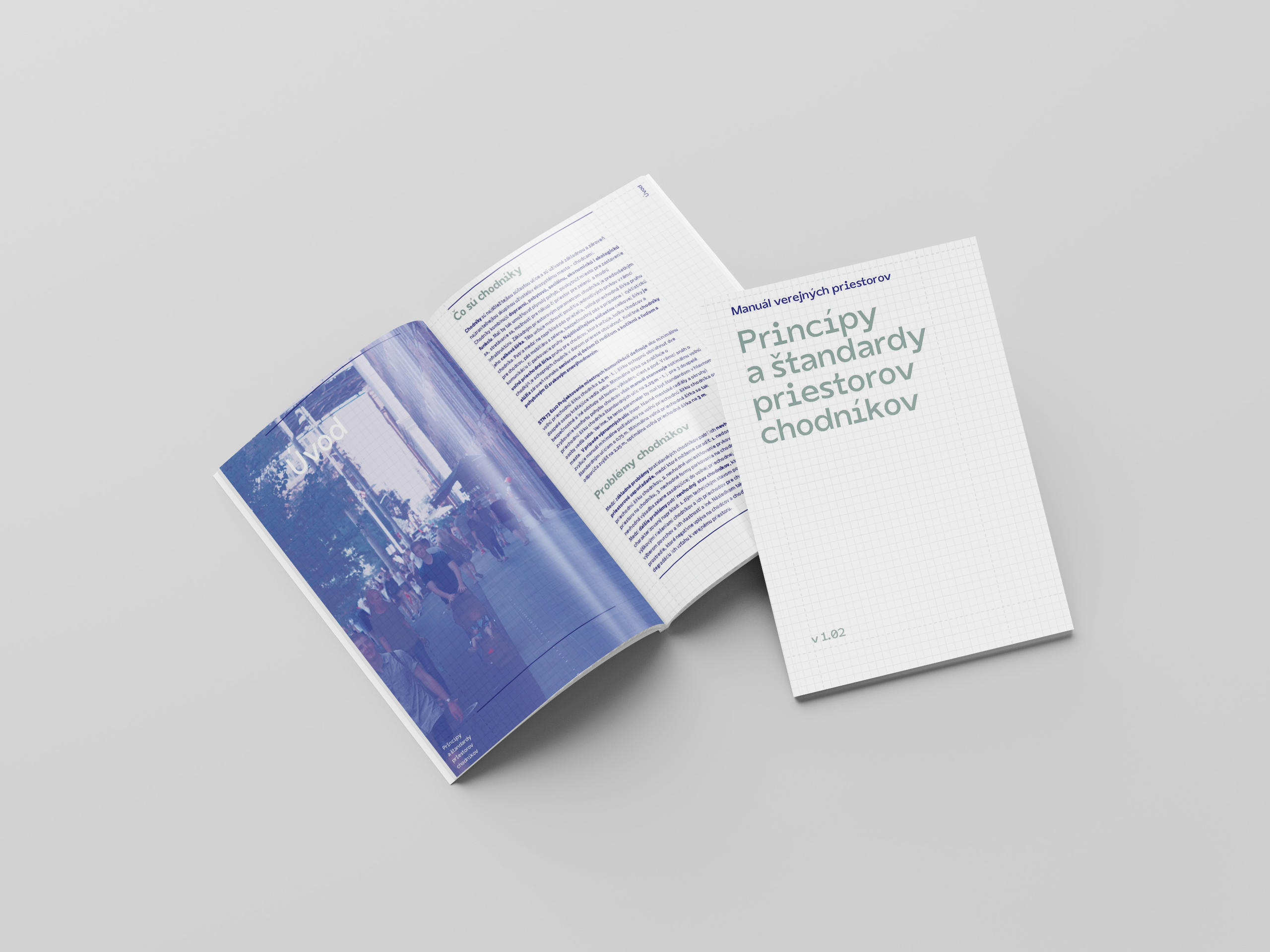
Principles and Standards of Sidewalk Spaces
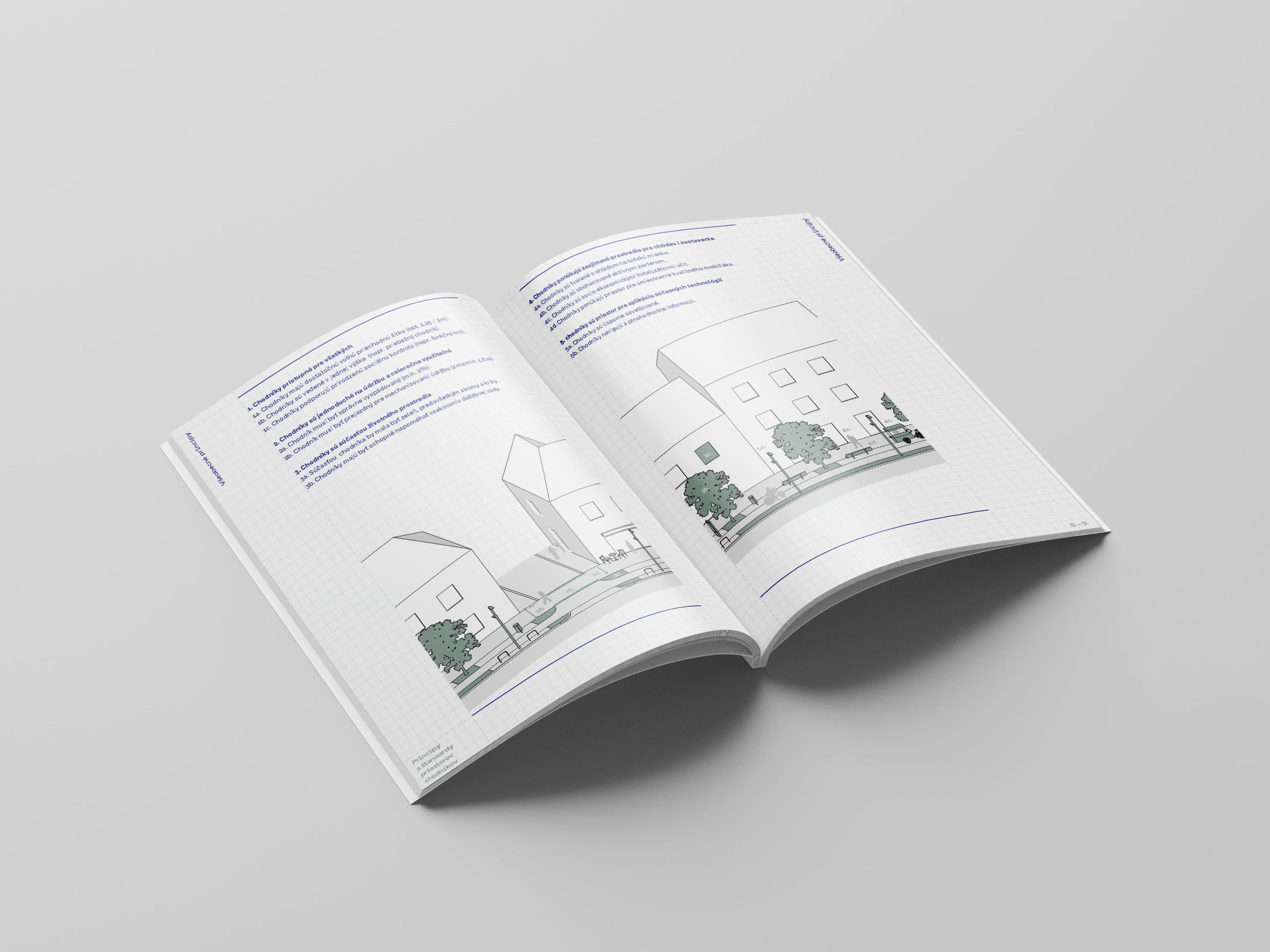
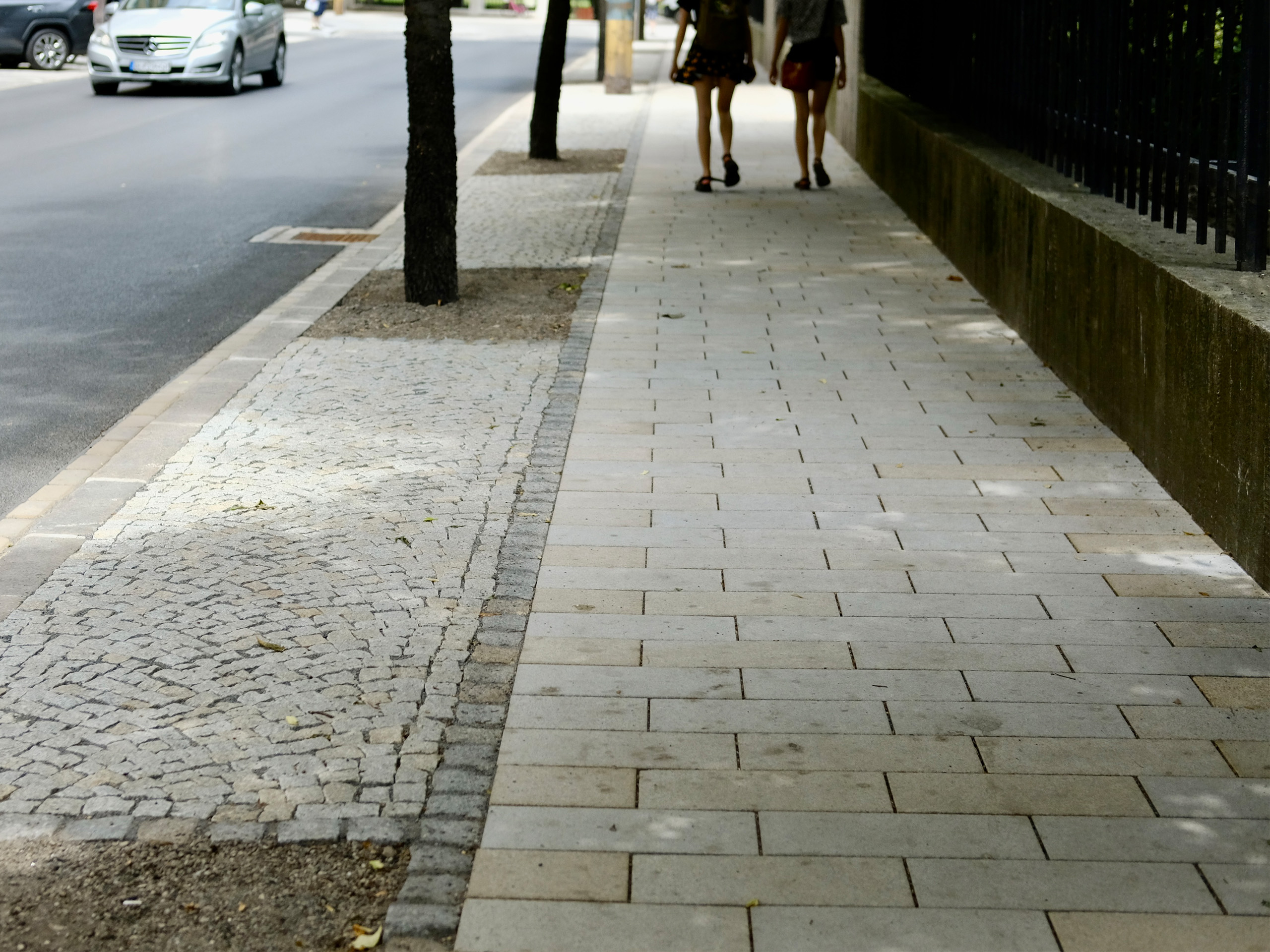
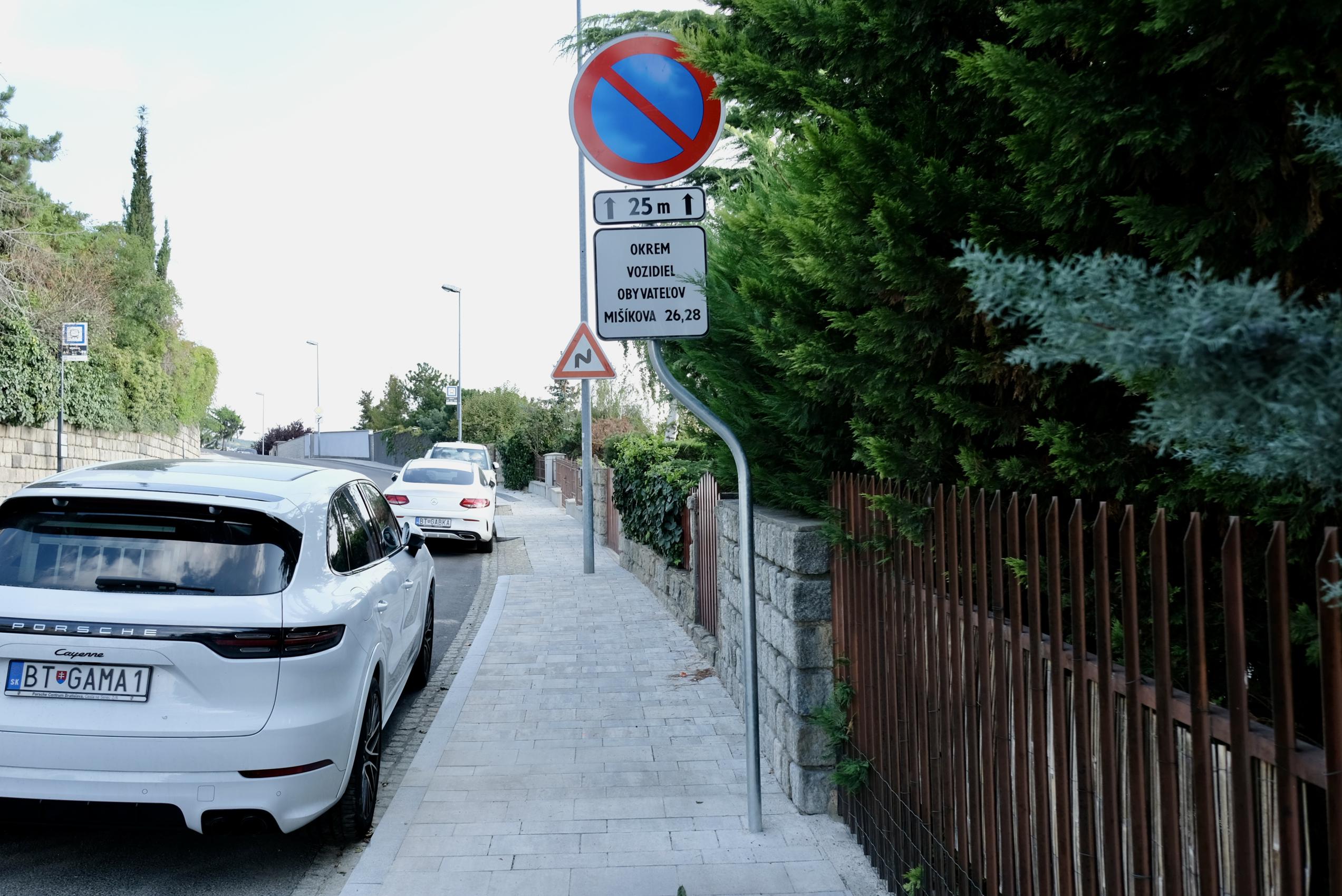
For the purpose of protecting the climate and adapting to its change, we must accelerate the shift away from a transport policy focused primarily on individual motorized transport towards sustainable forms of mobility, among which walking plays an irreplaceable role. The City of Bratislava is developing walking as a fully-fledged alternative to other modes of transport. Sidewalks are the most important part of the street and are used by the most basic yet also the most vulnerable group of city ecosystem users – pedestrians. Sidewalks combine transport, social, economic, recreational, and ecological functions. They should therefore allow for smooth movement, provide space for stopping and meeting, offer opportunities for shopping, as well as space for green and blue infrastructure.
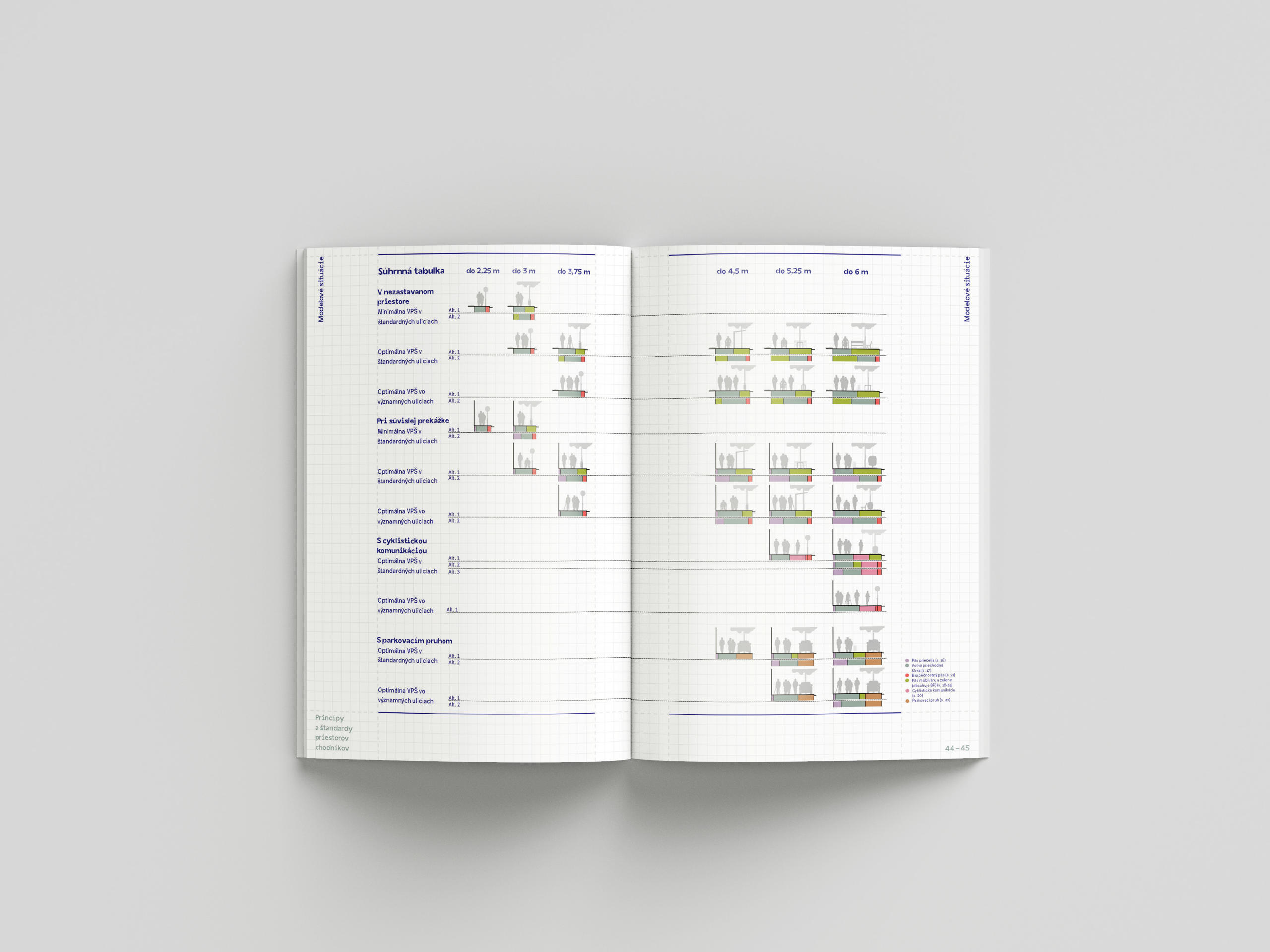
The fundamental spatial parameter of a sidewalk is primarily its total width. This determines the possibilities for the use of different elements within the sidewalk. These include, for example, the frontage zone, the clear pedestrian through-route, the furniture and greenery strip, the safety buffer, and possibly also cycle lanes or parking strips. The most important component of the total width is the clear pedestrian through-route, which determines how many pedestrians the sidewalk can accommodate in a given cross-section. Quality sidewalks must serve seniors, children, parents with strollers, as well as people with mobility or visual impairments equally.
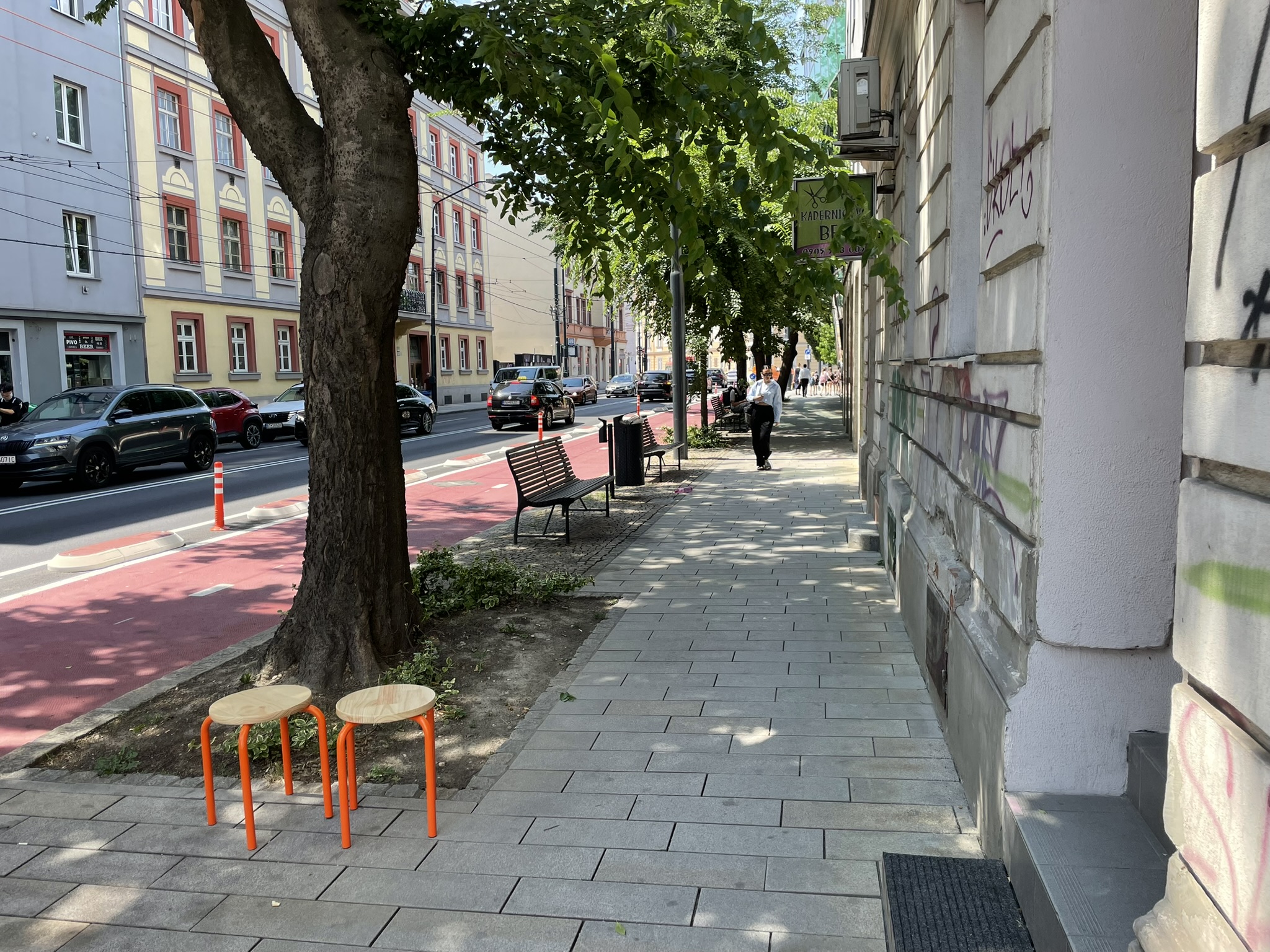
Part of the principles and standards was a comprehensive methodology of research, testing, and piloting of products in public space. Testing was carried out in the form of sampling and controlled-condition trials, which allowed for detailed monitoring of the effectiveness and functionality of the proposed solutions. Piloting, on the other hand, involved applying the acquired knowledge to specific revitalization projects, particularly in Bratislava’s urban streets, where improvements to public spaces were implemented with the aim of enhancing their quality and accessibility for residents (see Projects →).