Place › Bratislava /SK/
Date › 2022
Client › The City of Bratislava
Processor › Metropolitný inštitút Bratislavy
Authors › O. Nováček, R. Tündöková, R. Žitňanský, M. Daňová, K. Kasalová, M. Marcinov, M. Pivoňková, J. Urban
Type › Urban strategy
Status › Approved
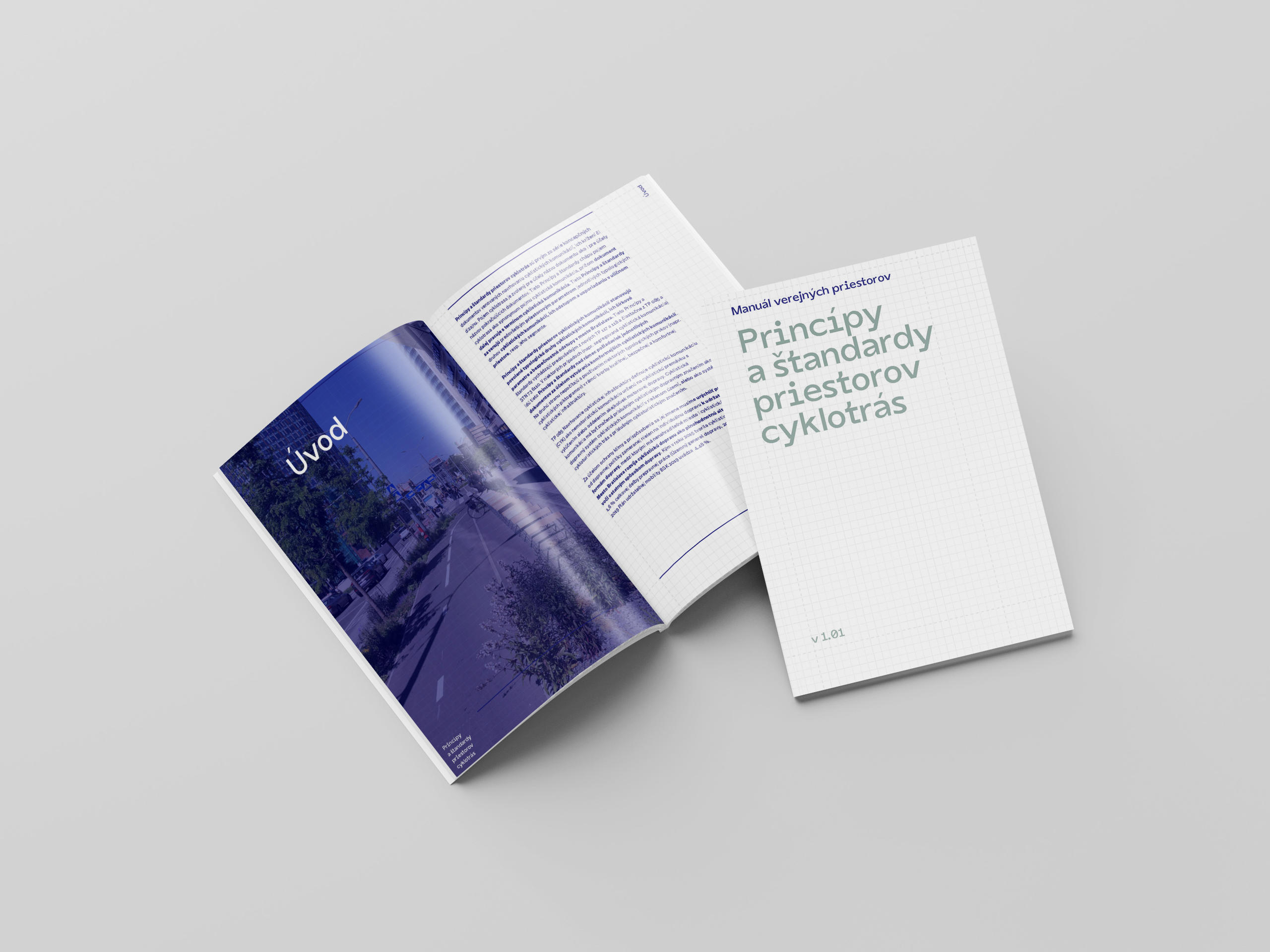
Principles and Standards of Cycle Route Spaces
For the purpose of protecting the climate and adapting to its change, we must accelerate the transition from a transport policy focused primarily on individual motorized transport towards sustainable forms of mobility, among which cycling plays an irreplaceable role. The City of Bratislava is developing cycling as a fully-fledged alternative to other modes of transport. The Principles and Standards of Cycle Route Spaces are the first in a series of conceptual documents dedicated to the design of cycling infrastructure, its intersections, and its overall design. The term cycle route was chosen for the title of this document as well as for subsequent related documents. In these Principles and Standards, the term cycle route is understood as synonymous with cycling infrastructure, with the document further working with the term cycling infrastructure.
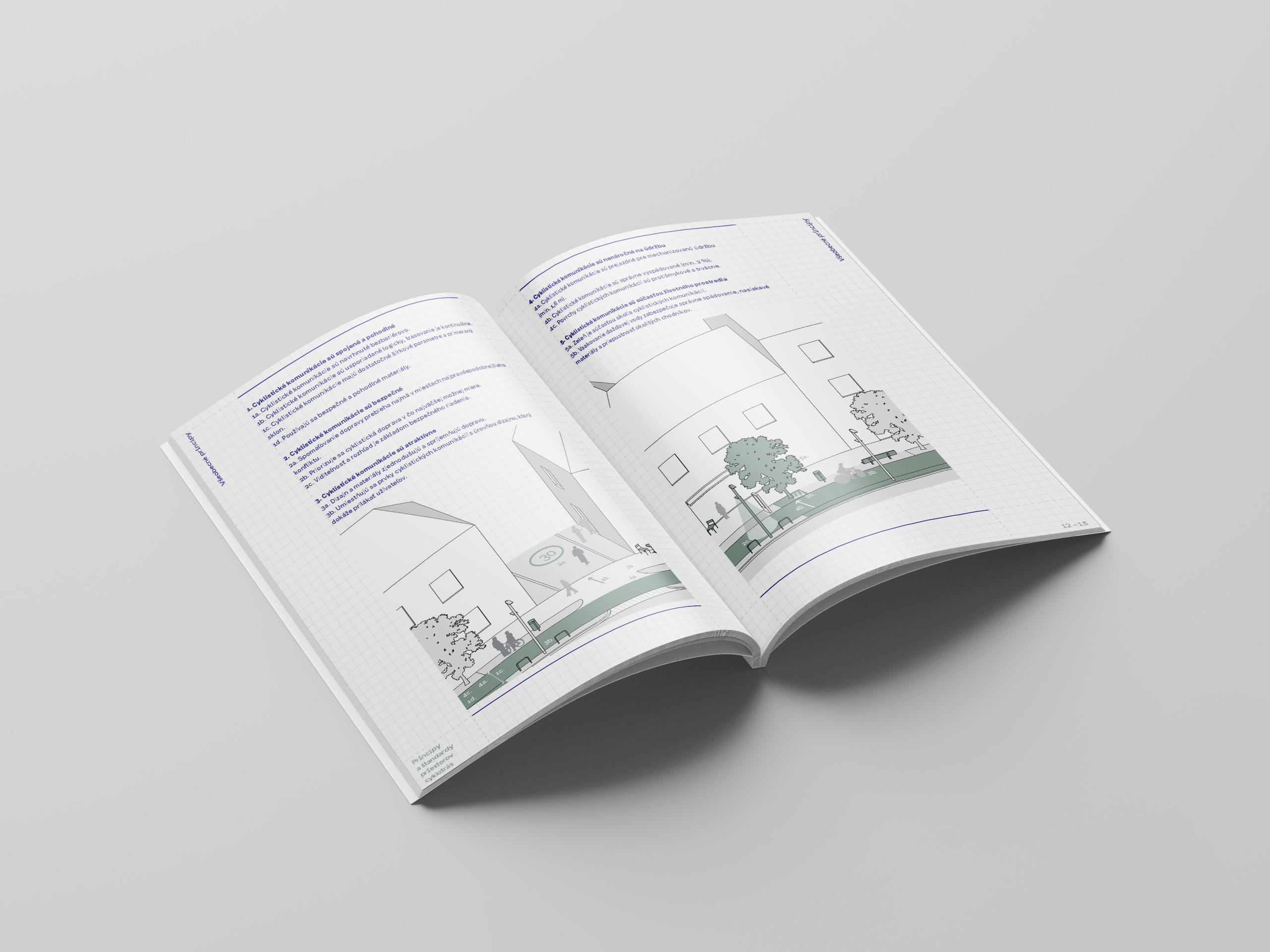
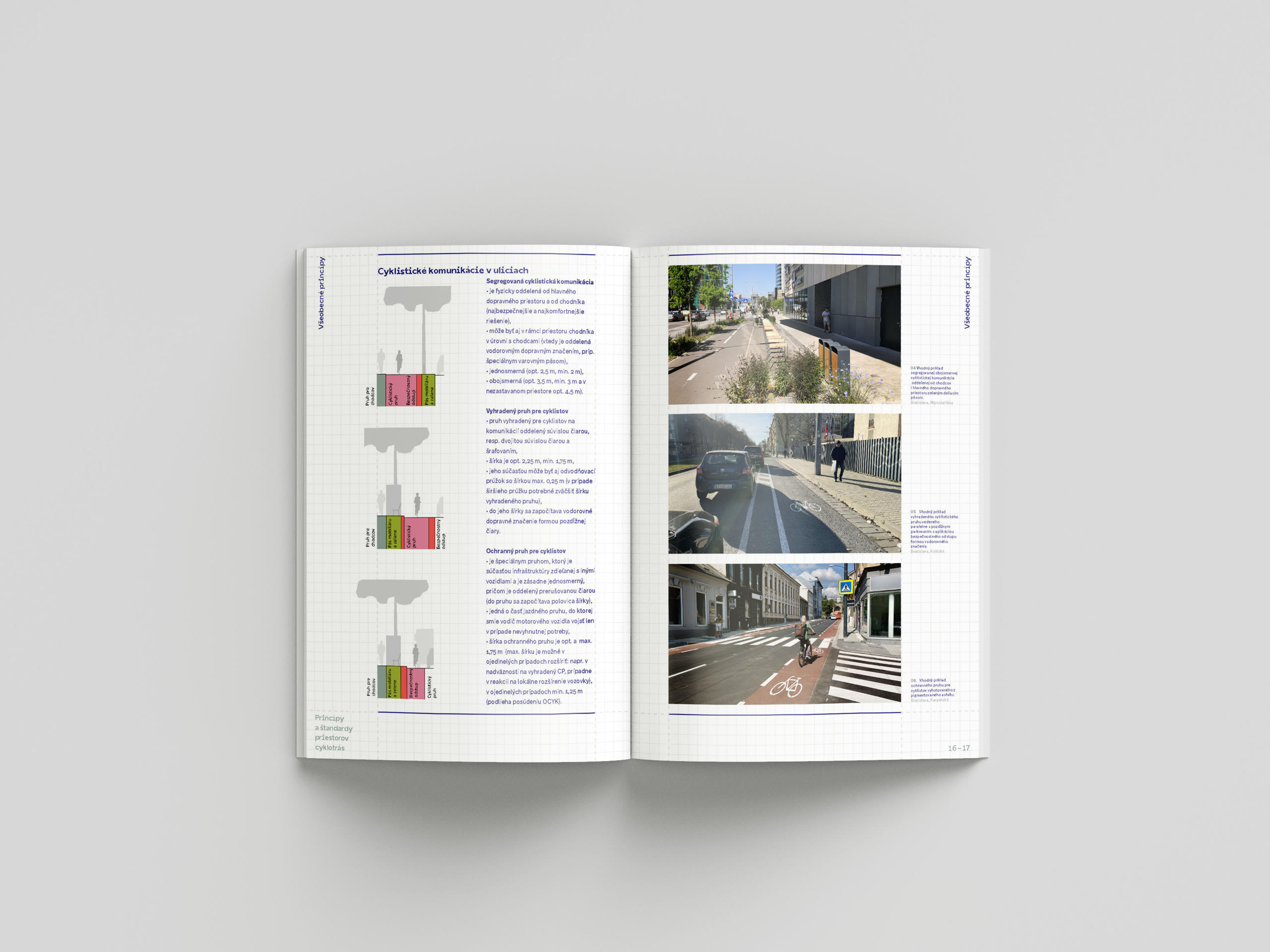
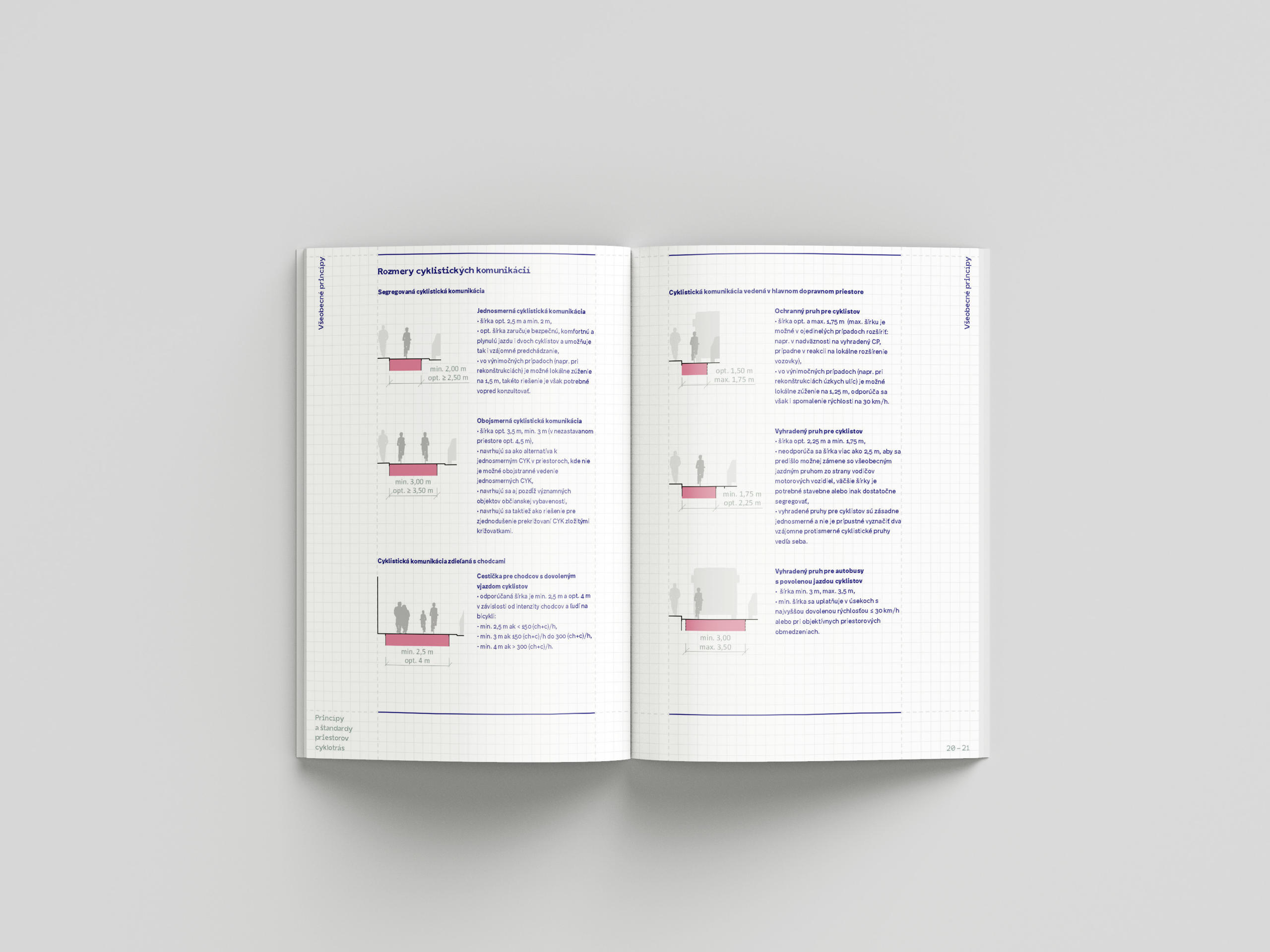
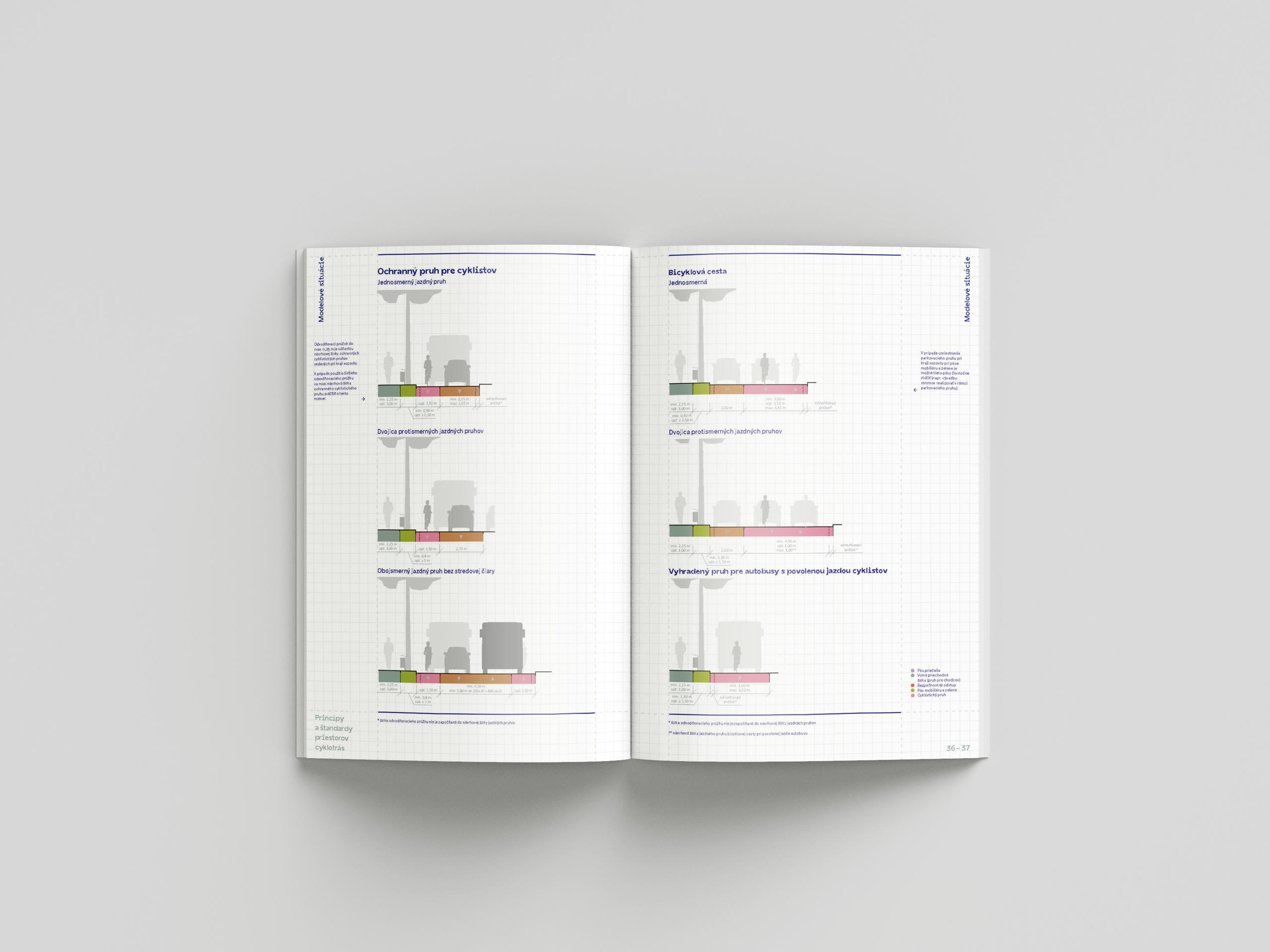
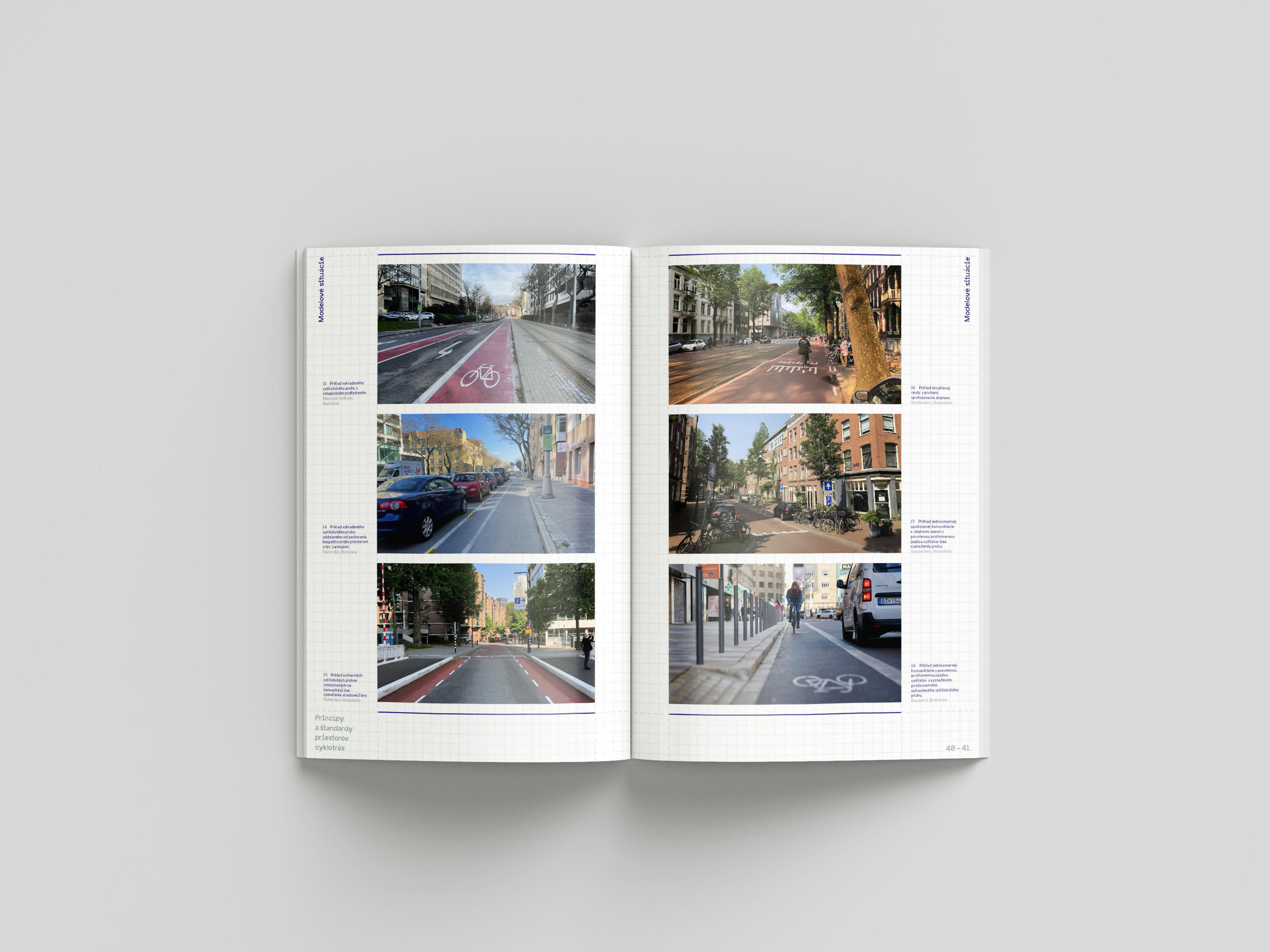
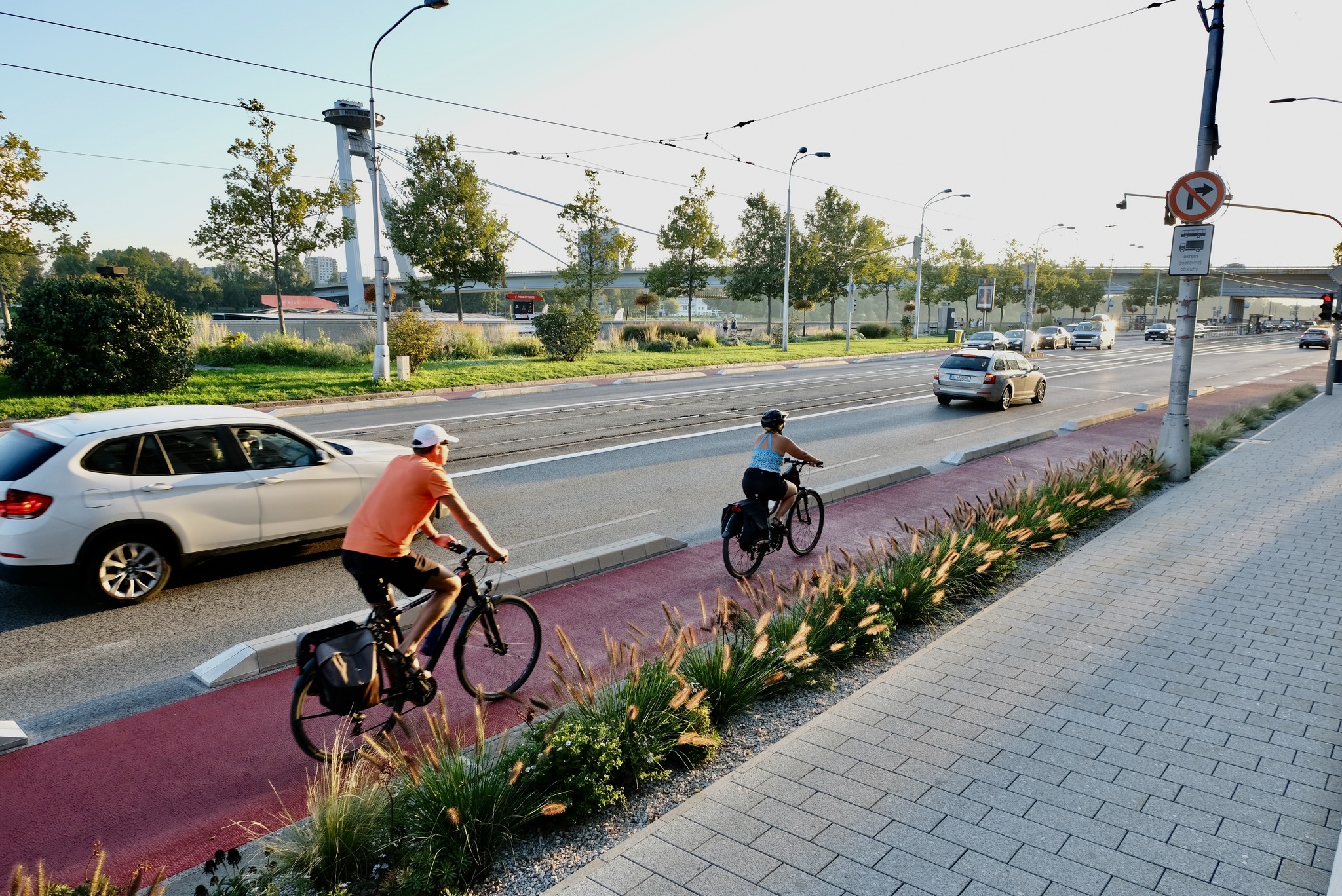
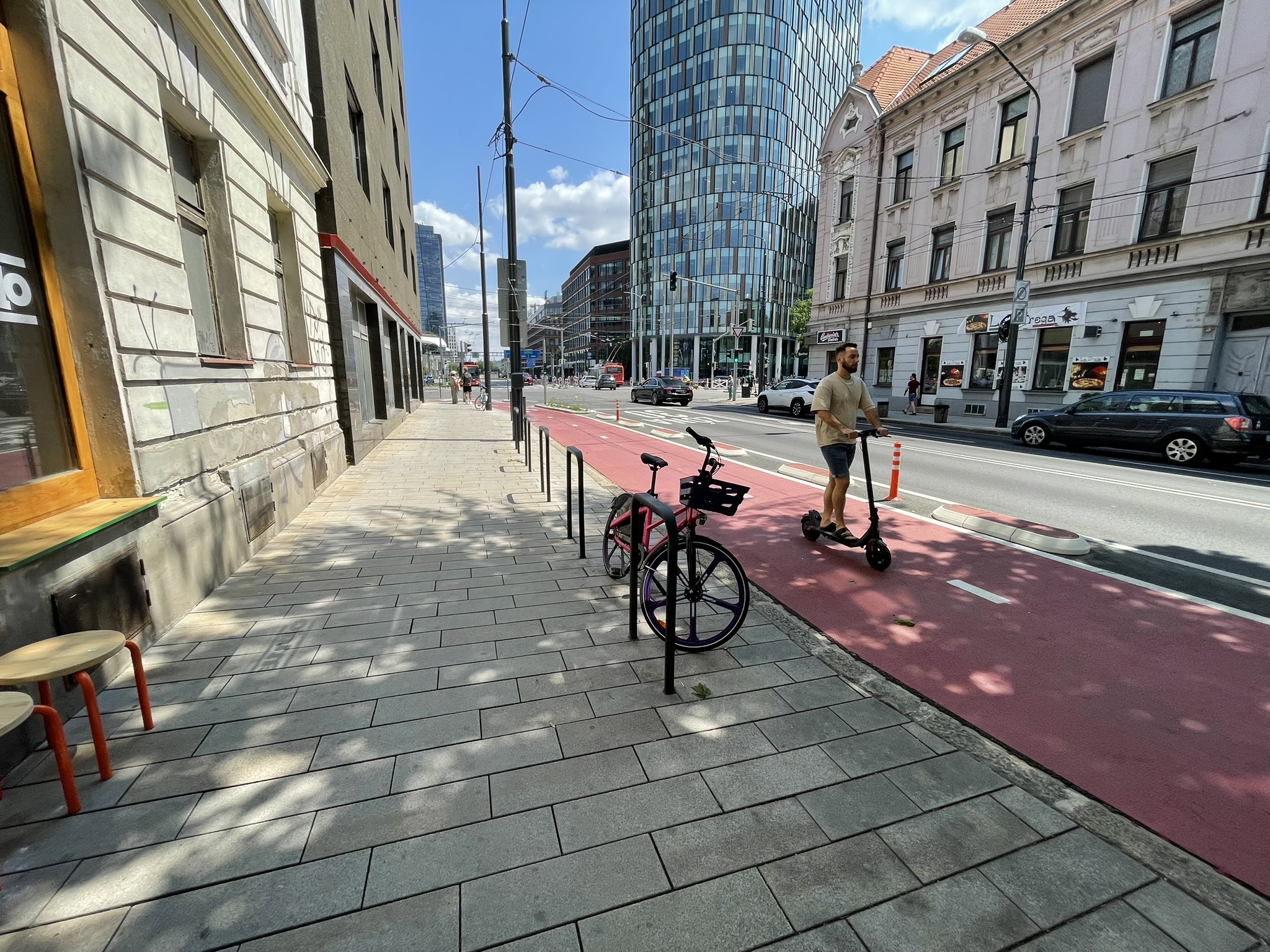
These Principles and Standards primarily address the spatial parameters of different typological types of cycling infrastructure, their clearances, and their arrangement within the street profile or its segments. The Principles and Standards of Cycling Infrastructure Spaces set out the permitted typological forms of cycling infrastructure in Bratislava, their width parameters, and the required safety clearances. In certain cases (e.g., segregated cycle tracks), these Principles and Standards go beyond the requirements of other existing documents in order to create more comfortable cycling facilities. On the other hand, they do not foresee the use of certain typological elements (such as bicycle pictograms) in the creation of high-quality, safe, and comfortable cycling infrastructure.
Part of the Principles and Standards was a comprehensive methodology of research, testing, and piloting of products in public space. Testing was carried out through sampling and controlled-condition trials, which made it possible to closely monitor the effectiveness and functionality of the proposed solutions. Piloting, on the other hand, involved applying the knowledge gained to specific revitalization projects, particularly in Bratislava’s urban streets, where improvements to public spaces were implemented with the goal of enhancing their quality and accessibility for residents (see Projects →).